The Evolution of Smart Home Energy Management
The modern household is undergoing a profound technological renaissance, shifting from passive, analog environments into highly responsive, data-driven ecosystems. At the very core of this transformation is the concept of intelligent energy management. For decades, homeowners have struggled with the inherent inefficiencies of manual climate control and “dumb” electrical outlets that continuously draw power regardless of actual usage. Today, the integration of smart home devices represents a paradigm shift, offering unprecedented control over both the macroeconomic scale of whole-home heating and cooling, and the microeconomic scale of individual appliance energy consumption.
By strategically implementing automated systems, residents are no longer forced to choose between environmental sustainability and personal comfort. Instead, these technologies work synergistically in the background, analyzing behavioral patterns, monitoring ambient conditions, and making real-time micro-adjustments. This guide serves as your definitive roadmap to mastering two of the most impactful upgrades you can make to your property: the central brain of your climate control (the smart thermostat) and the versatile nodes of your electrical grid (smart plugs).
Understanding the Financial and Environmental Impact
The financial implications of upgrading to a smart energy ecosystem are substantial. Traditional heating, ventilation, and air conditioning (HVAC) systems account for roughly half of the average household’s energy expenditure. When this massive energy draw is managed by outdated, non-programmable thermostats, the resulting waste is staggering. Homes are frequently heated or cooled to optimal comfort levels while completely unoccupied, burning through fossil fuels and electricity with zero return on investment.
Simultaneously, the proliferation of modern electronics has introduced a phenomenon known as “vampire draw” or phantom load. Devices plugged into standard wall outlets continuously siphon electricity even when powered down or in standby mode. While a single device’s phantom load might seem negligible, the cumulative effect across dozens of appliances, chargers, and entertainment systems can inflate monthly utility bills by up to ten percent. Addressing these inefficiencies requires a multi-tiered approach, combining the macro-level intelligence of smart thermostats with the granular, device-level control of smart plugs.

The Comprehensive Guide to Smart Thermostats
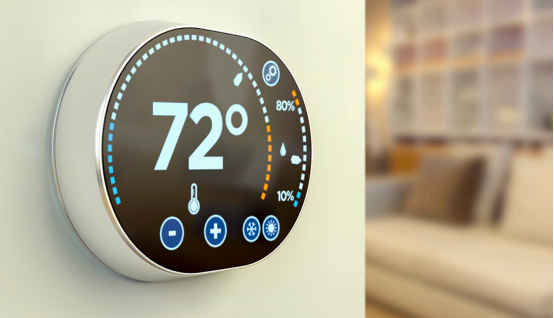
A smart thermostat is vastly more than a digital control panel; it is an advanced computing device engineered to optimize your home’s thermal envelope. Unlike their manual or basic programmable predecessors, which rely on rigid, user-defined schedules that quickly become obsolete when daily routines change, smart thermostats utilize a combination of algorithmic learning, environmental sensors, and internet connectivity to deliver dynamic climate control.
The primary value proposition of a smart thermostat lies in its ability to achieve the perfect balance of comfort and energy savings. It operates on the principle that the most efficient HVAC system is one that only runs exactly when needed, and only for as long as necessary to achieve the desired temperature. By continuously gathering data points from your interactions, local weather forecasts, and even the physical characteristics of your home’s insulation, these devices create highly sophisticated thermal profiles.
Algorithmic Learning and Behavioral Adaptation
One of the most revolutionary features of top-tier smart thermostats is their capacity for machine learning. During the initial weeks of operation, the device meticulously records your manual temperature adjustments, correlating them with the time of day, the day of the week, and external weather conditions. Over time, the algorithm identifies complex patterns that a human would struggle to articulate.
For example, the system may recognize that you consistently lower the temperature by three degrees at 10:30 PM on weekdays, but prefer a warmer climate on Sunday mornings. Once these patterns are established, the thermostat transitions from a reactive tool to a proactive assistant, automatically adjusting the climate to your exact preferences before you even realize you are uncomfortable. This seamless automation ensures that energy is never wasted on an empty house, yet the environment is always perfectly conditioned the moment you walk through the door.
- Predictive Pre-Conditioning: The thermostat calculates exactly how long it takes to heat or cool your specific home, turning on the system in advance so the target temperature is reached precisely when you arrive, rather than just starting the process at your arrival time.
- Weather Integration: By pulling real-time meteorological data via Wi-Fi, the system can delay a scheduled heating cycle if it knows an incoming warm front will naturally raise the indoor temperature, thereby conserving significant energy.
- HVAC Health Monitoring: Advanced models monitor the runtime and efficiency of your HVAC equipment, alerting you to sudden drops in performance that may indicate a failing component or a clogged air filter, preventing costly emergency repairs.

Advanced Features: Geofencing and Remote Accessibility
While algorithmic learning handles the predictable aspects of your routine, life is inherently unpredictable. This is where geofencing technology elevates the smart thermostat from a convenient gadget to an indispensable energy-saving powerhouse. Geofencing utilizes the GPS and location services built into your smartphone to create an invisible, virtual perimeter around your property. This allows the thermostat to react to your actual physical location in real-time, rather than relying solely on historical data or rigid schedules.
When the system detects that your smartphone has crossed the geofence boundary and is moving away from the house, it automatically triggers an “Away” mode. This mode safely allows the indoor temperature to drift outside of optimal comfort zones, drastically reducing the workload on your HVAC system. Conversely, when you re-enter the geofence radius on your commute home, the system seamlessly transitions back to “Home” mode, initiating the heating or cooling cycle so the environment is perfect upon your arrival.
Multi-Zone Control and Sensor Integration
Traditional thermostats suffer from a critical design flaw: they only measure the temperature in the exact hallway or living room where they are mounted. This frequently leads to frustrating hot and cold spots throughout the house, as the system shuts off when the main room is comfortable, leaving distant bedrooms freezing or sweltering. Smart thermostats solve this architectural challenge through the deployment of remote temperature and occupancy sensors.
By placing these wireless sensors in various rooms throughout your home, the smart thermostat gains a holistic view of the entire property’s climate. You can prioritize specific rooms at specific times of day. For instance, you can instruct the system to ignore the temperature in the downstairs living room at night, and instead base its heating and cooling decisions entirely on the readings from the master bedroom sensor. This targeted approach guarantees comfort exactly where you are, without over-conditioning empty spaces.
| Feature | Traditional Thermostat | Smart Thermostat |
|---|---|---|
| Scheduling | Rigid, manual programming required | Dynamic, auto-learning algorithms |
| Remote Access | None; requires physical interaction | Full control via smartphone app from anywhere |
| Location Awareness | None | Geofencing automatically adjusts based on user location |
| Energy Reporting | No data provided | Detailed monthly reports and real-time usage metrics |

Why You Should Install Smart Plugs in Various Places
While smart thermostats masterfully handle the macro-climate of your home, true energy efficiency and automation require granular control over individual devices. This is exactly where smart plugs demonstrate their immense value. A smart plug is a small, Wi-Fi-enabled adapter that plugs directly into a standard electrical outlet; you then plug your conventional appliance or lamp into the smart plug. Instantly, a “dumb” device is transformed into a highly controllable, internet-connected node within your smart home ecosystem.
The strategic deployment of smart plugs across various places in your home unlocks a multitude of benefits ranging from convenience and security to significant energy savings. Because they require absolutely no hardwiring or electrical expertise to install, they represent the most accessible entry point into home automation. However, their simplicity belies their power. When utilized creatively, smart plugs can automate tedious daily tasks, secure your home against electrical hazards, and provide deep insights into your household’s power consumption habits.
Strategic Placement for Maximum Utility
To extract the maximum value from smart plugs, they must be deployed thoughtfully across different zones of your living space. Each room presents unique opportunities for automation and energy conservation. In the living room, entertainment centers are notorious for consuming massive amounts of standby power. Televisions, gaming consoles, soundbars, and streaming devices continue to draw current long after they have been turned off. Grouping these devices onto a single power strip connected to a smart plug allows you to completely sever their power supply overnight or while you are at work, instantly eradicating a major source of vampire draw.
In the bedroom, smart plugs can revolutionize your morning routine. Imagine waking up not to a blaring alarm, but to a bedside lamp that gradually increases in brightness, simulating a natural sunrise. Simultaneously, a smart plug in the kitchen can activate your coffee maker, ensuring a fresh pot is brewing exactly as you step out of bed. These small, automated touches significantly elevate your daily quality of life while ensuring devices are never left running longer than necessary.

Creative Uses for Smart Plugs Beyond Basic Lighting
While automating lamps is the most common use case, restricting smart plugs to basic lighting severely limits their potential. One of the most critical applications for smart plugs is mitigating severe safety hazards associated with high-heat appliances. Devices such as hair straighteners, curling irons, space heaters, and clothing irons are frequently left on by accident, posing a catastrophic fire risk. By connecting these appliances to a smart plug, you gain the ability to remotely verify their status from your smartphone, no matter where you are in the world.
Furthermore, you can implement failsafe automation routines. A smart plug can be programmed with an auto-shutoff timer, ensuring that power is automatically cut thirty minutes after the plug is activated. This guarantees that even if you completely forget about the appliance in a rush to leave the house, the smart plug will intervene and neutralize the danger autonomously.
Advanced Energy Monitoring and Holiday Automation
Beyond safety and convenience, premium smart plugs feature built-in energy monitoring capabilities. These devices track the exact kilowatt-hour (kWh) consumption of whatever is plugged into them, transmitting the data to your smartphone in the form of easy-to-read graphs. This feature is invaluable for identifying energy-hogging appliances. By temporarily rotating an energy-monitoring smart plug among older refrigerators, dehumidifiers, and window AC units, you can mathematically determine whether an aging appliance is costing you more in electricity than it would cost to replace it with a modern, energy-efficient model.
Smart plugs also serve as a powerful security tool, particularly when you are away on vacation. Traditional mechanical timers are easily identified by potential intruders due to their rigid, predictable schedules. Smart plugs, however, can be set to “Away Mode,” where they randomly turn connected lamps and radios on and off during evening hours. This creates a highly convincing illusion of occupancy, deterring burglars by making the house appear lived-in while you are miles away.
- Holiday Lighting Control: Automate festive decorations and Christmas trees to turn on at sunset and off at midnight, saving you from crawling behind furniture to unplug them daily.
- Plant Care Automation: Connect indoor grow lights or automated watering systems to smart plugs, ensuring your indoor garden receives precisely timed care regardless of your personal schedule.
- Parental Controls: Regulate screen time by connecting televisions or gaming consoles to a smart plug, allowing you to automatically cut power at a designated bedtime or manually disable them remotely.

Synergizing Your Smart Home Ecosystem
The true magic of smart home technology is realized not when devices operate in isolation, but when they communicate and collaborate as a unified ecosystem. Integrating your smart thermostat and smart plugs through a centralized hub or voice assistant (such as Amazon Alexa, Google Assistant, or Apple HomeKit) unlocks a level of automation that borders on science fiction. This synergy allows you to create complex “Routines” or “Scenes” that execute multiple commands across various devices simultaneously with a single voice prompt or automated trigger.
For example, you can create a comprehensive “Goodnight” routine. When you issue the command to your voice assistant, the system can automatically lower the smart thermostat to your preferred sleeping temperature, simultaneously instruct all smart plugs connected to entertainment centers and living room lamps to cut power, and activate a specific smart plug powering a white noise machine in the bedroom. This orchestration ensures total home efficiency and comfort without requiring you to manually interact with a dozen different switches and dials.
Sensor-Driven Conditional Automation
Taking integration a step further involves conditional automation, often referred to as “If This, Then That” (IFTTT) logic. By utilizing the environmental data gathered by your smart thermostat’s sensors, you can trigger actions in your smart plugs. Suppose you have a drafty room that struggles to stay warm in the winter. You can connect a portable space heater to a heavy-duty smart plug in that specific room.
Through conditional logic, you can instruct the smart home ecosystem: If the remote temperature sensor in the drafty room drops below 65 degrees, Then activate the smart plug powering the space heater. Once the sensor registers that the room has reached 70 degrees, the system automatically turns the smart plug off. This creates a localized, highly efficient micro-climate solution that prevents the central HVAC system from overworking to heat the rest of the house unnecessarily, representing the ultimate fusion of macro and micro energy management.

Best Practices for Installation and Security
While the operational benefits of smart thermostats and smart plugs are immense, achieving a seamless experience requires careful attention during the installation and network setup phases. For smart thermostats, the most critical physical requirement is the presence of a Common Wire, or “C-wire.” Because smart thermostats feature bright Wi-Fi radios, color displays, and continuous background processing, they require a steady, dedicated stream of 24-volt power from the HVAC control board. Relying solely on the battery or power-stealing methods can lead to Wi-Fi drops and erratic HVAC behavior. If your home lacks a C-wire, utilizing an add-a-wire adapter kit or consulting a professional electrician is highly recommended to ensure long-term stability.
For smart plugs, the physical installation is trivial, but the network configuration is paramount. The vast majority of smart home devices, including smart plugs, operate exclusively on the 2.4GHz Wi-Fi band rather than the faster 5GHz band. This is an intentional design choice, as 2.4GHz signals penetrate walls and solid objects far more effectively, ensuring reliable connections to plugs hidden behind couches or in distant bedrooms. When setting up your devices, ensure your smartphone is temporarily connected to your router’s 2.4GHz network to prevent pairing failures.
Safeguarding Your Digital Perimeter
As you expand your smart home ecosystem, you are fundamentally increasing the number of access points to your home network. Therefore, robust cybersecurity practices are not optional; they are mandatory. Every smart thermostat and smart plug you install represents an internet-connected node that, if compromised, could grant malicious actors access to your personal data or control over your home environment.
To secure your automated home, you must prioritize network hygiene. Begin by isolating your smart devices on a dedicated “Guest” Wi-Fi network. Most modern routers allow you to broadcast a secondary network that provides internet access but prevents devices from communicating with your personal computers, smartphones, and network-attached storage. Furthermore, always change the default passwords on your smart home accounts, enforce Two-Factor Authentication (2FA) wherever possible, and ensure that firmware updates are set to install automatically. These updates frequently contain critical security patches that protect against newly discovered vulnerabilities.
Frequently Asked Questions (FAQ)
- Q1: Do smart thermostats work with all types of heating and cooling systems?
- While smart thermostats are compatible with the vast majority of modern, centralized HVAC systems (including forced air, heat pumps, and radiant systems), they generally do not work with high-voltage (120V/240V) systems like electric baseboard heaters without specialized relays. Always use the manufacturer’s online compatibility checker, inputting your current wiring configuration, before making a purchase.
- Q2: Will a smart plug continue to work if my home’s internet goes down?
- If your home loses its internet connection, you will lose the ability to control the smart plug remotely via your smartphone or voice assistant. However, most smart plugs feature a physical override button on the side of the device, allowing you to turn the power on and off manually. Additionally, some localized automation routines established via a local hub may continue to function, but cloud-dependent schedules will be paused until connectivity is restored.
- Q3: Can I plug high-wattage appliances like air conditioners into a standard smart plug?
- You must be extremely cautious when connecting heavy-draw appliances to smart plugs. Standard smart plugs are typically rated for 10 to 15 amps (roughly 1200W to 1800W). Plugging a powerful window air conditioner or a large space heater into a plug with a lower rating can cause the plug to overheat, melt, or trigger a fire. Always verify the maximum amperage rating of both the appliance and the smart plug, and opt for “heavy-duty” smart plugs designed specifically for high-load appliances.
- Q4: How much money can I realistically expect to save by installing a smart thermostat?
- Savings vary heavily based on your local climate, the efficiency of your HVAC equipment,