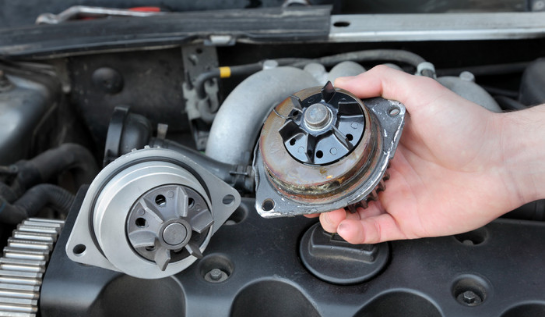
In modern car engines, water pumps and oil pumps play a vital role. They are like the “heart” and “blood vessels” of the engine, ensuring the circulation of coolant and oil to maintain the normal operation of the engine. If there is a problem with these two components, the engine may be seriously damaged due to overheating or insufficient lubrication. Let’s take a deep look at the role, working principle and common faults of water pumps and oil pumps.

1. Water pump
The main task of the water pump is to promote the circulation of coolant inside the engine to help dissipate heat. The engine will generate a lot of heat when it is running. If there is no effective cooling system, the high temperature will cause deformation of metal parts, failure of engine oil, and even cause explosion.
Working principle of water pump
The water pump is usually driven by a belt or chain and runs synchronously with the engine crankshaft. The rotation of the impeller generates centrifugal force, sucking the coolant from the radiator and pumping it into the water channels of the engine block and cylinder head. After the coolant absorbs heat, it flows back to the radiator for cooling, forming a cycle.

Common faults and symptoms
Aging of the water pump seal can cause coolant leakage, and a drop in the liquid level may cause the engine to overheat. Wear of the bearings can produce a “squeaking” or “buzzing” sound. After long-term use, the impeller may corrode or break, resulting in poor coolant circulation.
Maintenance Recommendations
Check the coolant level regularly and check the water pump whenever you replace the timing belt .
2. Oil pump
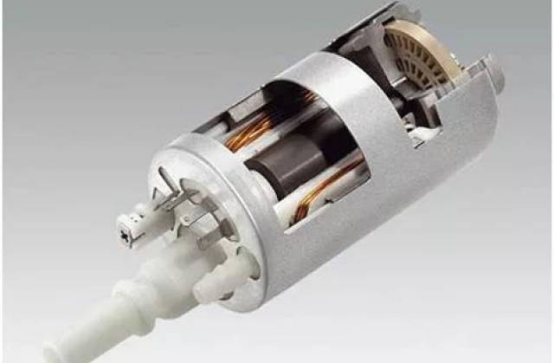
If the water pump is responsible for “cooling”, then the oil pump’s task is “lubrication”. The engine oil forms an oil film inside the engine, reducing the friction between metal parts while helping to dissipate heat and clean carbon deposits.
Working principle of oil pump
The oil pump is usually driven directly or indirectly by the crankshaft and is divided into two types: gear type and rotor type. The oil is sucked from the oil pan, filtered by the filter, and pumped to the crankshaft, camshaft, piston and other key parts. The oil pressure sensor monitors the oil pressure to ensure the normal operation of the lubrication system.

Common faults and symptoms
will light up due to oil pump wear, too thin oil or oil line blockage . Insufficient lubrication can cause metal parts to grind dry, producing a “clicking” sound. Failure to change the oil for a long time may cause the oil pump filter to become clogged , causing sludge to accumulate, and affecting the oil supply efficiency.
Maintenance Recommendations
Replace the engine oil and filter regularly, use oil viscosity that meets the manufacturer’s standards, and avoid running the engine at a low oil level for a long time.

3. How to protect the engine’s “blood circulation system”?
Replace the coolant and engine oil regularly according to the manufacturer’s recommendations. Pay attention to abnormal signals such as high water temperature and oil light on, and check immediately. Avoid frequent high-speed or short-distance cold driving, which will increase wear .