
Car safety has always been one of the important considerations for consumers when buying a car. With the advancement of technology, modern cars are equipped with more and more airbags, from the initial steering wheel airbags to today’s side airbags, knee airbags, curtain airbags and even rear airbags. Many car advertisements also use ” how many airbags are equipped in the whole car” as a selling point, as if the more airbags there are, the higher the safety. But is this really the case?

The role and limitations of airbags
Airbags are an important part of the vehicle’s passive safety system. They inflate quickly when a collision occurs, cushioning the impact between passengers and hard objects in the car and reducing injuries. Since they were first used in mass-produced cars in the 1970s, airbags have saved countless lives. The more airbags, the better. Their protective effect depends on the following key factors:
- Is the position of the airbag reasonable?
In a side collision, side airbags and head air curtains are far more effective than knee airbags.

- Airbag triggering time
Popping out too early or too late can increase the risk of injury.
- Combination with seat belts
The design of airbags assumes that occupants wear seat belts, otherwise it may backfire.

Some luxury models boast “10+ airbags throughout the vehicle”, but the actual protection effect may not be better than that of a reasonably designed 6-airbag model. Some studies have shown that knee airbags have limited effect in reducing serious injuries and may even increase the risk of leg injuries. Some models have airbags installed in the rear seats, but if no one is sitting in a collision, it may increase the cost of repairs.
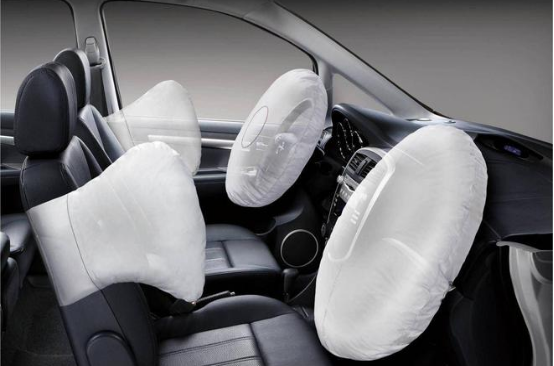
How to correctly view airbags?
- Prioritize the core airbag
Make sure the vehicle is equipped with at least front, side and head curtain airbags.
- Combined with body structure
Airbags are only auxiliary, and high-rigidity body + reasonable energy absorption design are the basis of safety.
- Reference authoritative test
Such as the collision results of the Insurance Institute for Highway Safety or the National Highway Traffic Safety Administration, rather than simply looking at the number of airbags.

Quality over quantity
Airbags are indeed an important safety feature, but blindly pursuing quantity is meaningless. Consumers should pay more attention to the rationality of the airbag layout, the rigidity of the vehicle body, and the overall safety design, rather than being misled by marketing rhetoric. After all, true safety comes from a scientific protection system, not just a pile of numbers .