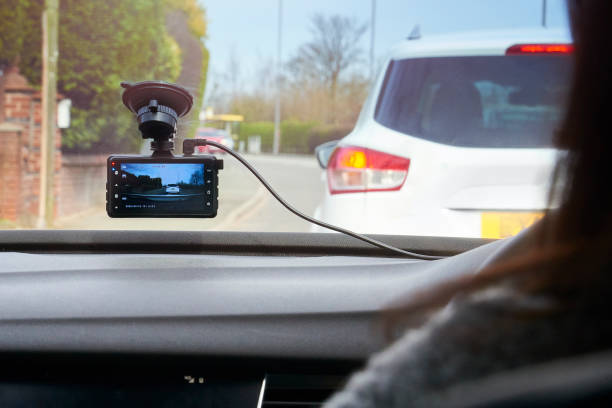
The Evolution of Intelligent Driving Systems
The automotive industry is undergoing a seismic shift, moving away from traditional mechanical engineering toward software-defined mobility. Intelligent driving systems represent the convergence of high-performance computing, advanced sensor suites, and deep learning algorithms designed to replace or augment human decision-making in complex traffic environments.
The Core Pillars of Smart Mobility
- Sensor Fusion: The integration of LiDAR, radar, cameras, and ultrasonic sensors to create a 360-degree environmental model.
- AI & Machine Learning: The “brain” of the vehicle, responsible for object detection, path planning, and predictive behavior analysis.
- Connectivity (V2X): Vehicle-to-Everything communication that allows cars to interact with traffic infrastructure and other vehicles.

Understanding the Levels of Autonomous Driving
The progression from Level 2 (Partial Automation) to Level 5 (Full Automation) is not merely a linear increase in technology, but a fundamental change in the relationship between the driver and the vehicle. This journey involves overcoming significant hardware and software limitations.
Defining the SAE Autonomy Spectrum
The industry standard, established by the Society of Automotive Engineers (SAE), provides a clear roadmap for autonomous development:
| Level | Capability | Driver Requirement |
|---|---|---|
| L2 | Partial Automation (Steering + Acceleration) | Constant supervision |
| L3 | Conditional Automation | Driver must intervene when prompted |
| L4 | High Automation | No intervention required in specific geofenced areas |
| L5 | Full Automation | No human intervention required anywhere |

Market Leaders and Competitive Landscape
While Tesla has dominated the public narrative, several global automakers are rapidly closing the gap by prioritizing proprietary software stacks and vertically integrated hardware. These companies are investing billions into custom silicon and massive data centers to train their neural networks.
Strategic Approaches to Autonomy
Different manufacturers are taking distinct paths toward achieving full self-driving capabilities:
- Hardware-First Approach: Companies emphasizing massive sensor redundancy (LiDAR + Radar) to ensure safety in edge cases.
- Software-First Approach: Companies leveraging vast fleet data to refine camera-only vision systems, focusing on edge-case learning.

Future Outlook and Technical Challenges
The path to L5 autonomy is fraught with regulatory, ethical, and technical challenges. Achieving true “level 5” performance requires solving the “long tail” problem—the millions of rare, unpredictable scenarios that occur on public roads that current AI models have yet to encounter.
The Road Ahead
As we move toward a future of autonomous mobility, the focus is shifting from simple lane-keeping to complex urban navigation. The synergy between smart cities and intelligent vehicles will be the final piece of the puzzle, enabling vehicles to communicate with traffic lights, road sensors, and emergency services in real-time.
Frequently Asked Questions (FAQ)
- Q1: What is the primary difference between L2 and L3 autonomy?
- At L2, the driver must remain fully engaged and monitor the road at all times. At L3, the vehicle can handle driving tasks in specific conditions, allowing the driver to take their eyes off the road, provided they are ready to regain control when the system requests it.
- Q2: Why is sensor fusion critical for autonomous driving?
- Sensor fusion combines data from different types of sensors (e.g., LiDAR for depth, cameras for color/sign recognition) to create a robust and reliable environmental model that is more accurate than any single sensor could provide alone.
- Q3: When will L5 fully autonomous vehicles be available to the public?
- While L4 robotaxis are currently operating in select geofenced cities, L5 (full autonomy anywhere) is still years away due to the immense complexity of unmapped environments, regulatory frameworks, and edge-case handling.
- Q4: How does V2X technology improve road safety?
- V2X (Vehicle-to-Everything) allows vehicles to “see” around corners or through obstacles by receiving data from traffic signals, smart infrastructure, and other connected vehicles, significantly reducing reaction times and accident rates.