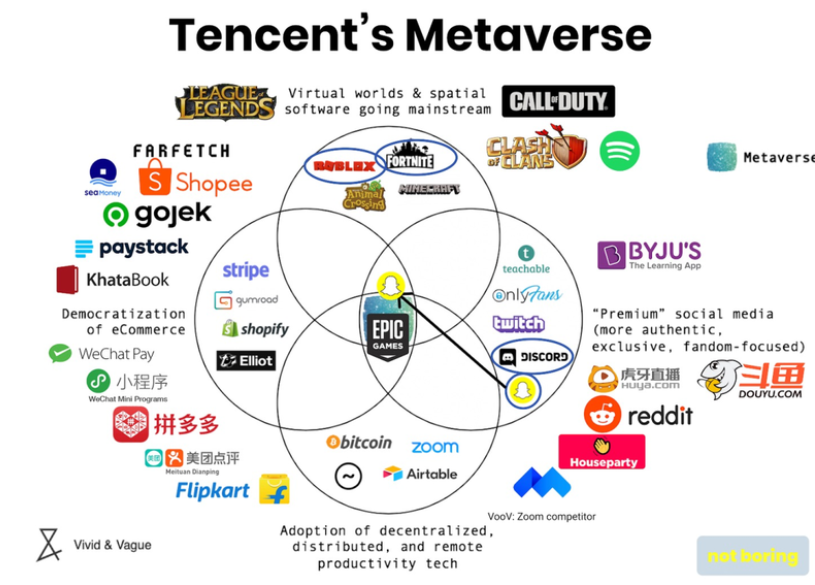
Tencent, the world’s largest gaming company and the architect of the WeChat ecosystem, has articulated a vision for the future that differs significantly from Western interpretations of the metaverse. While companies like Meta focus on immersive virtual reality (VR) headsets, Tencent’s strategy centers on the concept of the “Complete Reality Internet” (Quanzhen Internet). This paradigm shift aims to bridge the gap between the physical and digital worlds through a seamless integration of social connectivity, high-performance computing, and industrial applications.
The Philosophy of the Complete Reality Internet (Quanzhen Internet)
The term “Complete Reality Internet” was first introduced by Tencent’s founder, Ma Huateng (Pony Ma), in late 2020. Unlike a purely virtual sandbox, this vision suggests that the internet is no longer a tool we use, but an environment we inhabit. It represents an evolutionary stage where digital technology is so deeply embedded in physical reality that the distinction between the two becomes irrelevant.
The Shift from Virtual to Reality-Augmented
Tencent’s approach prioritizes “utility” over “escapism.” While Western metaverse concepts often emphasize social VR and digital avatars, the Complete Reality Internet focuses on how digital twins, real-time rendering, and AI can optimize real-world processes. This includes everything from remote surgery and industrial automation to smart city management, making the metaverse a productivity tool rather than just an entertainment hub.
Expert Insight:
Tencent is playing the long game by focusing on infrastructure rather than hardware. By controlling the engine (Unreal Engine via Epic Games) and the social layer (WeChat), they ensure that any future metaverse must run through their ecosystem.
Core Technological Pillars Powering Tencent’s Vision
To achieve a “Complete Reality,” Tencent is investing heavily in four foundational technologies that serve as the backbone of their ecosystem. These pillars ensure that the transition between digital and physical experiences is low-latency, high-fidelity, and persistent.
-
High-Performance Computing & Cloud:
Tencent Cloud provides the massive processing power required for real-time rendering and data synchronization across millions of users. -
Artificial Intelligence:
AI is used to generate content, manage digital identities, and power the “Digital Twins” used in industrial sectors. -
Real-Time Communication (RTC):
Leveraging years of experience with WeChat and QQ, Tencent is perfecting low-latency audio and video transmission essential for immersive environments. -
Game Engines & Graphics:
Through its 40% stake in Epic Games (Unreal Engine), Tencent possesses the world’s most advanced tools for creating photorealistic digital worlds.
The Role of Digital Twins in Industry
A key component of Tencent’s strategy is the creation of Digital Twins—virtual replicas of physical assets. In the Complete Reality Internet, a factory manager can monitor a production line in real-time through a 3D interface, identifying bottlenecks and simulating changes before implementing them in the physical world. This “Industrial Metaverse” is where Tencent sees the most immediate economic value.
Strategic Advantage: The Convergence of Social and Gaming
Tencent holds a unique advantage that few other global tech giants can match: the ultimate combination of social stickiness and gaming expertise. This dual-threat capability allows them to build a metaverse that is both engaging and functional.
| Feature | Tencent (Complete Reality) | Meta (Western Metaverse) |
|---|---|---|
| Primary Entry Point | WeChat / Mobile Ecosystem | Quest VR Headsets |
| Core Strength | Social + Gaming + Payments | Social Media + Hardware |
| Target Audience | B2B Industrial & B2C Users | Consumer Social & Entertainment |
| Monetization | Transaction Fees & Infrastructure | Advertising & Hardware Sales |
By integrating mini-programs within WeChat, Tencent has created a “lightweight metaverse” where users can shop, work, and socialize without ever leaving a single application. This existing user base of over 1.3 billion people provides a massive testing ground for new immersive features.
Future Outlook and Regulatory Landscape
The path to a Complete Reality Internet is not without challenges. In China, Tencent must navigate a complex regulatory environment that scrutinizes data privacy, algorithmic influence, and youth gaming habits. However, by aligning its metaverse goals with national priorities like “Industrial Digitalization,” Tencent has positioned its strategy as a benefit to the broader economy.
Pro Tips for Navigating the Tencent Ecosystem
-
Focus on Interoperability:
Enterprises should look at how Tencent’s Cloud services can integrate with existing CRM systems to prepare for 3D data visualization. -
Leverage Mini-Programs:
The easiest way to enter Tencent’s version of the metaverse today is through WeChat Mini-Programs, which offer a low barrier to entry for brands. -
Watch the Gaming Sector:
New titles from TiMi and Lightspeed Studios often serve as tech demos for Tencent’s latest rendering and AI capabilities.
Frequently Asked Questions (FAQ)
-
What is the main difference between Tencent’s metaverse and Meta’s?
- Tencent focuses on the “Complete Reality Internet,” which emphasizes the integration of digital tools into physical life and industry, whereas Meta focuses more on immersive virtual reality and 3D social spaces.
-
Does Tencent have its own VR headset?
- While Tencent has explored hardware, its primary strategy is “software and infrastructure first,” preferring to provide the engines, cloud services, and social platforms that other hardware can utilize.
-
How does WeChat fit into the metaverse?
- WeChat acts as the identity and payment layer. In Tencent’s vision, your WeChat identity is the digital passport you use to navigate between physical stores, digital services, and virtual environments.
-
Is the Complete Reality Internet only for gaming?
- No. While gaming provides the technology, the Complete Reality Internet is heavily focused on “Industrial Metaverse” applications like smart manufacturing, healthcare, and urban planning.
-
What are the biggest risks to Tencent’s metaverse strategy?
- The primary risks include strict government regulations regarding digital content and data, as well as the high cost of maintaining the massive cloud infrastructure required for real-time rendering.
Editorial notice: Independent editorial content. Brand, platform, and company names are used for context only; this site is not affiliated with, endorsed by, or authorized by Sony, Tencent, Apple, Samsung, Dell, or any other mentioned rights holder.