When Tesla’s FSD system changes lanes smoothly on the 405 highway in Los Angeles, or Waymo’s driverless taxis pick up passengers on the streets of Phoenix, we can’t help but ask: How do these self-driving cars “see” this complex world? Today, we will deeply analyze the two core pillars supporting autonomous driving technology – sensor systems and processing units, and unveil the veil of this black technology that changes the way people travel.

The “sensory world” of autonomous driving: multi-sensor fusion system
Modern autonomous driving systems rely on a variety of sensors working together, each with its own unique strengths and limitations:
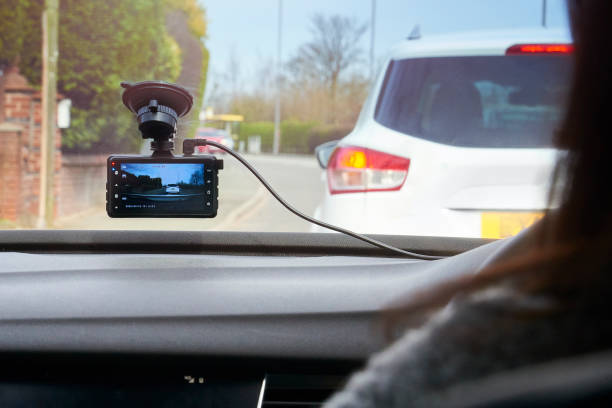
1. Optical camera
Typical suppliers: Israel’s Mobileye, Germany’s Continental
Performance parameters: 8 million pixels, 120 degrees wide angle, 60fps frame rate
Cost range: $ 50-300 /piece
Advantages: high resolution, color recognition, text recognition
Limitations: Greatly affected by lighting conditions
2. Millimeter wave radar
Typical suppliers: Texas Instruments of the United States, Bosch of Germany
Performance parameters: 77GHz frequency band, detection distance 250 meters, ±0.1 degree angular resolution
Cost range: $ 100-500 /piece
Advantages: not affected by weather, accurate distance measurement, can detect hidden objects
Limitations: Unable to identify object details
3. LiDAR
Typical suppliers: Luminar and Velodyne from the United States
Performance parameters: 905nm or 1550nm wavelength, 300m detection distance, 0.1 degree angular resolution
$ 75,000 per unit in 2012 to $ 500-1,000 per unit in 2023
Advantages: centimeter-level accuracy, real-time 3D point cloud modeling
Limitations: Performance degrades in rainy and snowy weather, and the cost is still high

The “brain” of autonomous driving: heterogeneous computing platforms
Processing this sensor data requires incredible computing power. NVIDIA’s Drive Orin chip can provide 254 TOPS of computing power, which is equivalent to processing 16 4K video streams simultaneously.
1. Mainstream autonomous driving chip solutions
NVIDIA Drive series: Orin chip, the latest Thor chip in 2023
Mobileye EyeQ: EyeQ5, optimized for visual algorithms
Tesla FSD chip: self-developed 72 TOPS chip, using 14nm process
Qualcomm Snapdragon Ride: Targeting L4 autonomous driving, 700 TOPS computing power
2. Processing flow breakdown
1. Sensor raw data: about 8TB/hour
2. Preprocessing stage: noise reduction, time synchronization
3. Perception algorithm: Tracking 200+ dynamic objects simultaneously
4. Decision-making and planning: Update the driving trajectory every 100 milliseconds
5. Control output: Steering accuracy ±0.5 degrees, throttle control millisecond response

Technical challenges and future trends
Current main technical bottlenecks
1. Extreme weather processing: sensor performance drops by 30-50% in dense fog or heavy rain
2. Prediction algorithm: The accuracy rate of predicting sudden pedestrian behavior is only 82%
3. Cost control: The total cost of L4 system is still as high as US$ 50,000-100,000 per vehicle
Technology Outlook 2025
4D imaging radars are becoming more common , the cost of solid-state lidars has dropped to less than $ 200 , in-vehicle AI chips have entered the 5nm process era , and V2X technology coverage has increased to 30%.
From the San Francisco Bay Area to Manhattan, New York, autonomous driving technology is reshaping the American transportation landscape. With the continuous improvement of sensor accuracy and the exponential evolution of computing chips, we are standing on the tipping point of a transportation revolution. Perhaps in the near future, the word “driving” itself will become a historical concept.